
Electricity powers nearly every aspect of modern life. Every day, we flip on the lights, charge our phones, turn on the air conditioning or heat and expect electricity to be there when we need it. Most of us don't think much about how that electricity gets to our homes, schools, hospitals and businesses, but it travels some distance before reaching the outlets we use every day.
Think of the electric grid like a transportation system for electricity.
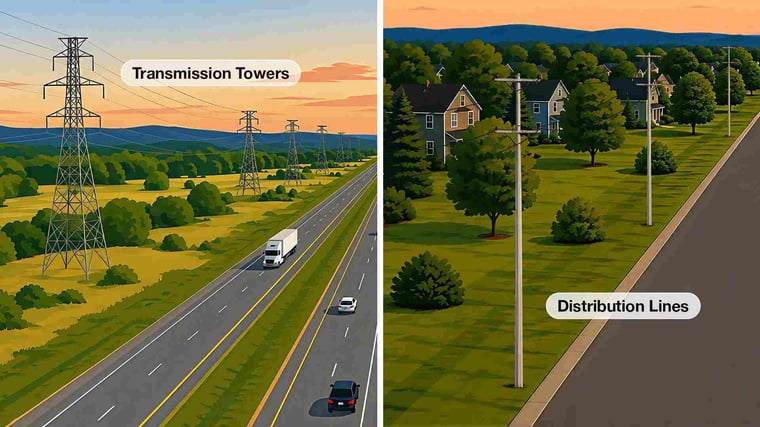
Just as highways connect cities and towns, the electric grid connects power plants and other energy resources to the communities that rely on them. The grid has four main parts:
- Generation – power plants or other facilities where electricity is produced.
- Transmission – the “highways” where electricity travels long distances across northern Pennsylvania and West Virginia.
- Substations – the “highway exits,” stations where power from transmission lines is transferred to distribution lines.
- Distribution –the last leg of power delivery. Think of substations as highway exits that connect the grid's major transmission highways to neighborhood streets, called distribution lines, which bring electricity directly to homes and businesses.
.jpg?width=1920&height=1080&name=NEET-Electricity-Distribution-Graphic_V2%20(1).jpg)
The proposed Kammer-Juniata Transmission Project is one example of how the transmission system helps to move electricity across the region. Transmission lines carry electricity from where it is generated to local utilities, which then deliver it to the homes, schools, hospitals and businesses people rely on every day. The Kammer-Juniata Transmission Project will expand the transmission system that moves electricity across Pennsylvania and West Virginia.
Transmission Lines: The Highways of the Electric Grid
Transmission lines carry large amounts of electricity over long distances at very high voltages. Because electricity travels more efficiently at higher voltages, transmission lines act like the interstate highways of the electric system.
These lines move electricity from where it is generated to substations located closer to communities.
Imagine if there was only one road connecting your town to the rest of the state. Any accident, construction or closure could cause major problems.
The electric grid can also become constrained or have bottlenecks that limit the flow of electricity.
Who Directs the Flow of Electricity?
Electricity doesn't move through the grid by accident.
In our region, the flow of electricity is coordinated by PJM Interconnection, the regional grid operator that serves 13 states and the District of Columbia. PJM is a private member organization made up of stakeholders including utilities, power producers, consumer advocates and state and local governments. PJM is regulated by the Federal Energy Regulatory Commission, a federal agency that oversees everything from the sale of natural gas to the building of new grid projects and state and local governments.
Every day, PJM works to balance supply and demand, monitor grid conditions and ensure electricity moves safely and reliably across the transmission network.
Why Are More Transmission Lines Needed?
The electric system is changing. Electricity demand is growing as communities expand, businesses invest in new facilities and more aspects of our daily lives depend on electricity. At the same time, new energy resources are being developed and connected to the grid.
To make sure electricity can continue moving efficiently from where it is generated to where it is needed, the transmission system must evolve as well.
Without sufficient transmission capacity, bottlenecks can occur, making it harder and more expensive to move electricity across the region.
.jpg?width=1920&height=1080&name=Split-Screen-Off-Ramp%20(1).jpg)
Building a More Reliable and Resilient Grid
Transmission lines help strengthen the overall grid.
A well-connected transmission network in Pennsylvania and West Virginia can:
- Improve reliability by providing multiple pathways for electricity.
- Keep the lights on during extreme weather and other disruptions.
- Provide access to more affordable energy.
- Expand transmission capacity to support homes, schools, hospitals, businesses and farms.
- Help ensure electricity is available when and where it is needed.
Just as modern roads and bridges help people travel safely and efficiently, modern transmission infrastructure helps keep power flowing to towns and neighborhoods.
Looking Ahead
Electricity powers nearly every aspect of modern life. As demand continues to grow and the ways we generate electricity continue to evolve, maintaining and expanding the transmission system remains an important part of keeping the grid reliable.
Projects like the proposed Kammer-Juniata Transmission Project are part of a broader effort to strengthen the regional grid, improve how electricity flows and help ensure homes, businesses and communities have access to reliable power for generations to come. This supports the project's goal of modernizing the grid and helping meet growing electricity demand across the region.
If you have questions or would like to connect with our team, click here to contact us.